
What an SDR Actually Does: Inside the Role That Builds B2B SaaS Pipeline
What a sales development representative actually does, how the role differs from a BDR, the skills that matter, and the AI question - in plain English.

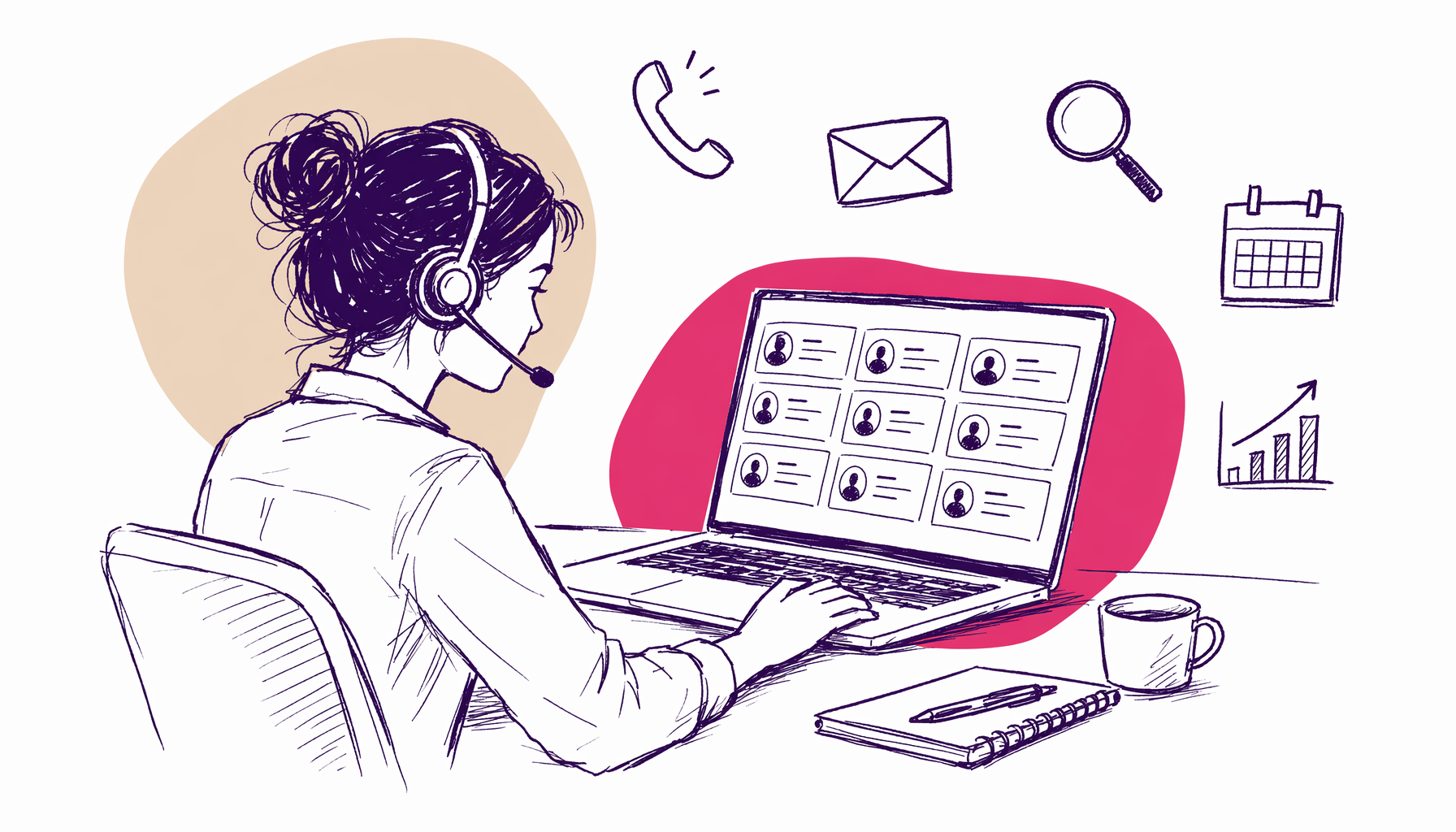
Every B2B SaaS company that sells outbound runs on SDRs. Most can't agree on what one really does, and the role is shifting fast.
A sales development representative (SDR) is the outbound rep who turns cold or warm leads into qualified meetings for an account executive. Good ones are equal parts researcher, copywriter, and human. AI is rewriting half the job, but the half that's left - finding the right person at the right moment with a real reason to talk - is more valuable than ever.
What is a sales development representative?
A sales development representative is a specialized outbound sales role. The job, in one sentence: turn a list of target accounts into a calendar of qualified meetings for the account executives who close the deals.
SDRs sit at the front of the sales pipeline. They aren't closers. They're the people responsible for everything that happens before a real sales conversation starts: finding accounts that match the ICP, researching the right contact, sending the first touch, surviving the silence, and getting a real human to agree to a 30-minute call.
The role got its modern shape from Aaron Ross's Predictable Revenue, which documented how Salesforce split prospecting from closing. The logic was simple: a rep who spends half the day cold-calling and half running deals does both badly. Specialize, and throughput goes up. Almost every modern B2B SaaS sales org has run with that idea. Some now want to run away from it.
What does an SDR actually do?
Strip away the LinkedIn-friendly job descriptions and the day looks something like this:
- Research and list building. Picking the 30-50 accounts to focus on this week. Finding the right contact at each one. Reading recent news, LinkedIn activity, and product reviews to find a hook worth opening with.
- Multichannel outreach. Cold email, phone calls, LinkedIn messages, sometimes a video or voice note. Most teams run a 12-15 touch sequence over 3-4 weeks per contact.
- Discovery and qualification calls. Short calls, usually 15-20 minutes, where the SDR confirms there's a real problem, a real budget, real authority, and timing that isn't fictional. Qualification frameworks like BANT earn their keep here.
- Handoff to the AE. Booking the calendar, writing a one-page brief, making sure the AE doesn't walk in cold.
- CRM hygiene. Notes, stage updates, account fields. Boring, essential, almost always the first thing to slip.
The KPIs that matter are meetings booked, accepted opportunities, and pipeline created. Not activity counts.
SDR vs. BDR vs. AE: what's the difference?
This is where titles get messy. The three you'll hear most:
- SDR (Sales Development Representative). Often handles both inbound (responding to demo requests) and outbound (cold prospecting). At smaller companies, usually pure outbound.
- BDR (Business Development Representative). Same job, different label. Some companies split it: BDR for outbound, SDR for inbound. Plenty of others use the terms interchangeably. There's no universal rule.
- AE (Account Executive). Closes deals. Owns the opportunity from the moment the SDR books the meeting until the contract is signed.
You'll also see LDR (lead development rep), MDR (market development rep), and ADR (account development rep) floating around. Same theme - qualify and pass on, don't close.
Honest take: don't fight over the label. Look at what someone owns. If they're booking meetings for someone else to run, they're doing the SDR job, no matter what's on the offer letter.
What skills make a great SDR?
The job looks tactical from the outside. The people who are good at it treat it as a craft.
The first skill is research instinct: turning a 12-second skim of a LinkedIn profile or a product review into a hook the prospect actually finds interesting. Most SDRs send the same template to everyone. The good ones notice that the prospect just got promoted, just hired three new reports, or just complained in public about their current vendor.
The second is writing. Cold email is a writing job that pretends to be a sales job. The best SDRs write short, specific, human first sentences and stop trying to sound impressive. Generic templates get generic results.
After that comes resilience (most outreach gets ignored, and you can't take it personally), real curiosity about the buyer's world (the scripted "tell me more about your priorities" version dies in discovery calls), and the unglamorous stuff: multichannel cadences, A/B tests on subject lines, CRM hygiene that doesn't fall apart in week three. New SDRs ramp faster when sales enablement is taken seriously, slower when it isn't.
Tooling fluency matters less than people think. Apollo, Salesforce, Outreach or Salesloft, LinkedIn Sales Navigator, intent platforms. None of it is hard to learn. All of it slows down reps who don't bother.
Where does the SDR role fit in a B2B SaaS org?
Most SaaS companies run SDRs as a dedicated function reporting into a Sales Development Manager or Director, who reports to the VP of Sales or CRO. At Series A or lean teams, SDRs sometimes report into Marketing instead, especially when the org is demand-led.
The handoff is the part that matters. SDR books the meeting; AE owns the deal from there. Some orgs add a discovery layer where a senior SDR runs the first call before passing to the AE. Others run a "pod" model: one AE plus one or two SDRs working a shared list.
The bigger shift in 2026: B2B deals now involve Buying Committees of 6 to 10+ stakeholders, per Gartner's research on the B2B buying journey. Booking one meeting with one champion isn't enough. The best SDRs map the whole committee and multi-thread from the first touch.
How are top SDR teams prioritizing in 2026?
The volume game is over.
For about a decade, the SDR playbook was "more" - more accounts, more touches, more activity. The math worked when reply rates were sitting at 3-5%. They're now closer to 1%. Inboxes are louder, buyers are tired, and "did you see my last email?" has become the most ignored question in B2B sales.
The teams winning right now have shifted from volume to signals. Instead of working through a 200-account list alphabetically, they pick the 20 accounts that just did something interesting: hired a VP of Engineering, raised a round, posted a job that hints at a tech-stack pain, or - the signal most teams still miss - had a customer publicly complain about a competitor.
That last one is the most underused. When a competitor's customer posts a critical review on G2 or Capterra, they're not a "lead" yet. They're something better: a person who has just articulated, in writing, exactly what they hate about their current vendor. That's the cleanest buying signal in B2B SaaS.
This is what Frustration-Led Growth is about. It's also where most buyer intent data tools fall short - they can tell you an anonymous account at "Acme Corp" is researching your category, but they can't tell you who at Acme just said in public that their current tool is broken.
One way to act on this: Reechee monitors competitor products on review platforms and sends Opportunity Alerts when their customers post a critical review, with the reviewer's company, contact details, and the specific pain attached. SDRs work the alert instead of the list.
Is AI replacing the SDR role?
The honest answer: parts of it, yes.
AI is already eating the most mechanical pieces of the job - list enrichment, draft generation, follow-up sequencing, basic objection handling on email. "AI SDR" tools have spent the last two years getting good enough that a single human SDR can now do the work of three. The people building those systems increasingly carry a newer title: GTM engineer.
What stays human is the judgment: which five accounts to chase this week, what hook will land with this specific buyer, how to read the four seconds of hesitation in a discovery call when the prospect says "yeah, that sounds interesting." Those four seconds tell you whether the deal is real or polite. AI doesn't catch them.
That's not a job loss. That's a job change. The SDR-as-typist role is dying; the SDR-as-strategist role is rising. Teams will be smaller and the work that's left will be higher-impact.
Anyone telling you the role is dead is selling you something - usually a tool that automates the easy 30% and pretends it solved the hard 70%.
The takeaway
SDR sounds like a simple title. The job underneath it sits at the most volatile point of the modern sales pipeline. The basics haven't really changed: find the right account, find the right person, earn 30 minutes of their attention, hand off to the AE. Everything around those basics is in flux. AI is taking the mechanical work, buying committees are getting bigger, and the spray-and-pray version of outbound is dying a slow public death. The best SDRs in 2026 aren't the ones who send the most emails. They're the ones who pick the right 20 accounts to send anything to at all.
If your SDRs are still finding accounts by gut feel, there's a faster path. Reechee surfaces Opportunity Alerts when a competitor's customer posts a frustration, with company, contact, and pain context attached. Start monitoring for free. 30-day free trial included.