
What Is GTM Engineering? The B2B SaaS Function Rising in 2026
9 of 10 GTM engineer responsibilities also appear in RevOps job postings. Here's what's actually new about the role - and when your B2B SaaS team needs one.

Three years ago, "GTM engineer" wasn't a job title anyone listed on LinkedIn. In 2025, postings for the role grew 205% year over year. The debate now is whether it's actually a new discipline or RevOps with a haircut.
What is GTM engineering, exactly?
GTM engineering is the discipline of building automated, signal-driven systems that move qualified buyers into your pipeline without manual research and list-building.
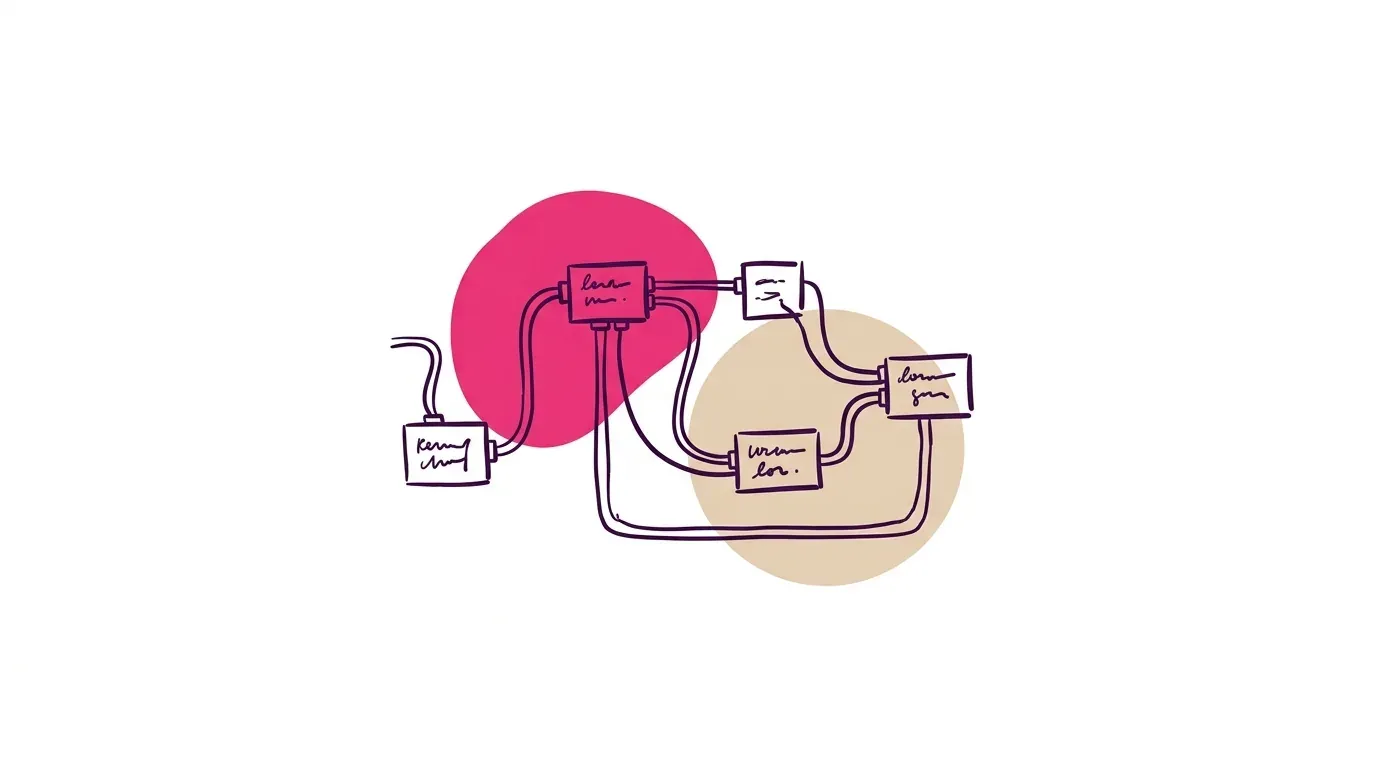
A GTM engineer connects four things into one machine: a signal source (intent data, web traffic, job changes, competitor frustration), an enrichment layer (company and contact data), an orchestration layer (the logic that decides who gets what message and when), and an action layer (sequenced outreach across email, LinkedIn, and calls). The output is pipeline that gets generated even when nobody on your team is at their laptop.
Clay coined the term in 2023 and used it to describe a hybrid operator who treats go-to-market as an engineering problem instead of a headcount problem. The role spread fast. By early 2026, companies like Stripe, Notion, Intercom, Rippling, OpenAI, and Vercel had all built dedicated GTM engineering functions.
What does a GTM engineer actually do?
The job description varies by company, but the workstream is consistent.
A typical week includes building a signal-detection workflow (a new pricing-page visit, a new hire on a target account, a critical software review going live), wiring it into an enrichment pipeline that pulls company firmographics and identifies the buying committee, running the data through scoring and routing logic, then triggering personalized outreach in a sequencing tool. After that, it's measuring what fired, what converted, and what to kill.
Bloomberry's analysis of 1,000 postings shows a clear tool stack consensus. Clay sits at the center as the orchestration layer (it's the market leader by a wide margin). HubSpot appears in 52% of postings, Outreach in 49%, Salesforce in 45%, Zapier in 39%, Apollo in 29%, and n8n in 28%. SQL and Python together appear in 38% of postings. This is not point-and-click work.
It's also not an SDR rebrand. Only 1.4% of postings mention cold calling. The average experience required is 4.11 years. Companies are hiring mid-career operators who can read a CRM schema and write a Python script in the same afternoon.
GTM engineering vs RevOps: is it really a new role?
The honest answer: the data says the jobs overlap heavily, and the mindsets don't.
When Bloomberry mapped the responsibilities listed in GTM engineer postings against RevOps postings, 9 out of 10 overlapped. Both roles touch CRM systems, data enrichment, process design, and pipeline management. The author's own conclusion was blunt: "GTM Engineering and RevOps jobs are essentially the same."
So why does the title exist? Because the center of gravity is different. RevOps postings lead with CRM ownership (98% mention it as a primary responsibility) and forecast accuracy. GTM engineer postings lead with automation, integration, and outbound system optimization. RevOps governs the systems you have. GTM engineering builds new ones.
That's not a different role. That's a different focus. A senior RevOps leader at one company is a senior GTM engineer at another, and the day-to-day work might look identical. The label tells you what leadership wants the function to prioritize, not what the person is qualified to do. If you're hiring, the title matters less than the brief: are you asking this person to optimize the funnel that exists, or build new pipeline-generation systems from scratch?
Why this role is rising right now
Three things converged in 2023-2024 that made GTM engineering possible at the scale it's at now.
First, AI tools became production-ready. Personalization at scale stopped being a research project and became a working capability inside platforms like Clay and Apollo. Second, buying signals multiplied. Intent data, technographic shifts, job changes, competitor frustration in public reviews, social activity, web behavior. Someone had to architect how all of that feeds into outreach. Third, every CFO got tighter. Hiring three SDRs to work the same lists became a harder sell than hiring one operator who could build a system that does the same work asynchronously.
The growth curve reflects all three. Open GTM engineering positions on LinkedIn have gone from a handful two years ago to a standing category. Compensation followed. According to eMarketer's 2026 FAQ, OpenAI is paying around $250,000 and Ramp around $184,000 for senior GTM engineers, with average US compensation around $182,000.
The underlying shift behind all of this: B2B selling is moving from volume-based outbound to signal-based outbound. GTM engineering is the function that operationalizes that shift.
Should your B2B SaaS team hire one?
You probably need one if three things are true: you're past about $1M ARR, you have a defined ICP, and you have a tool stack that has outgrown what your RevOps function can stitch together manually.
You probably don't need a full-time hire if you're before product-market fit, your ACV is small enough that a single founder still does outbound personally, or you've never written down what a "good lead" looks like for your business. In that case, GTM engineering is solving the wrong problem. The work to do first is figuring out who to sell to, not how to sell to them faster.
There's a middle path. Many early-stage teams get the same outcomes by upskilling their existing RevOps lead, hiring a fractional GTM engineer for a defined project, or working with an agency for a 90-day buildout. The role doesn't have to be a permanent headcount addition to deliver the leverage.
The takeaway
GTM engineering is the operating system underneath modern B2B SaaS pipeline generation. The label is new. The work mostly isn't. What changed is the toolset: AI, signal sources, and orchestration platforms that make systems-thinking pay off in months instead of years.
The teams that will benefit most are the ones already obsessed with where their next good signal is coming from. If that's you, the signal layer is where to start, because no automation downstream matters if the data going in is the same generic intent score every other team is buying.
Looking for a signal source most GTM engineers haven't plugged in yet? Reechee monitors competitor products on G2 and Capterra and surfaces every time a customer posts critical feedback. Reviewer company, buying committee, contact data, all enriched and ready for your sequencer. Start monitoring for free (30-day free trial).